
Biodiversity benefits of cattle
By Robyn Wrigley and George Porton – School of Earth, Environment and Sustainability, University of Leeds

In 2004, a restoration project in the Yorkshire Dales, UK, made the decision to replace sheep with cattle. The goal was simple – restore plant diversity in its grasslands.
New research by the University of Leeds has found this switch to be highly successful. Not only has plant diversity increased significantly, but other species groups have benefited also, in particular, butterflies.
Increased plant diversity
Grasslands are among Europe’s most diverse habitats, supporting wildflowers, grasses, insects and birds. But how they are grazed can make huge differences in which species thrive.
In recent decades, sheep farming has dominated the UK uplands. Sheep are effective grazers, but they feed selectively, targeting flower heads and keeping vegetation short. Over time, this can reduce the range of plants in a grassland.
Researchers found that, since sheep were replaced with cattle in 2004, plant diversity has increased by over 40%.
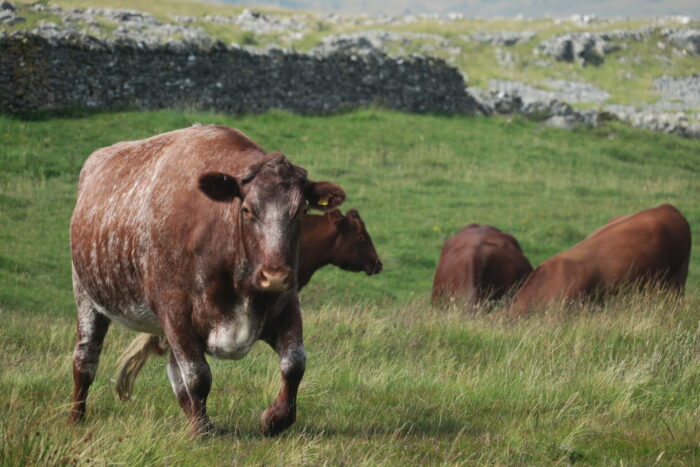
Cattle grazed differently: they feed less selectively, removing taller vegetation and reducing grass dominance, allowing wildflowers to thrive. Their larger size also disturbs the soil, creating bare patches for seeds to grow.
The result is a more varied grassland, a patchwork of species and vegetation heights rather than a uniform, tightly grazed lawn.
Importantly, sheep and cattle grazed fields were grazed at a similar and relatively low intensity. So differences in plant diversity were caused by the change in grazing animal, rather than a change in intensity of grazing.
Increased tree and scrub cover
Increasing plant species diversity shouldn’t be the only aim of restoration, with increasing the number of different habitats being another key part of the puzzle.
UK uplands are largely treeless with trees often confined to isolated patches. Increasing tree cover should therefore be a priority.
Another study at Wild Ingleborough found that cattle grazing has allowed trees to regenerate naturally - something that wasn’t happening under sheep. This may offer a cost-effective method to increase tree cover.
Positives for butterflies
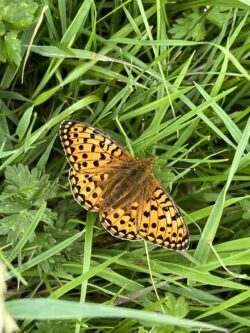 Restoring vegetation through cattle grazing was also found to have positive knock-on effects for biodiversity with significantly more butterflies too.
This matters beyond butterflies themselves: scientists often use them as indicators of ecosystem health because they are sensitive to environmental change. If butterflies are thriving, it can be a sign that the wider habitat is improving.
Areas grazed by cattle supported five times as many butterflies as sheep grazed, with twice as many species as well, including even rare species like Northern Brown Argus and Dark Green Fritillary.
Butterflies rely on diverse ecosystems for food, breeding and shelter. Adult butterflies feed on nectar from flowers, while caterpillars rely on specific host plants. The richer plant diversity created by cattle provides both.
The varied vegetation structure also provides important microhabitats. Taller plants offer shelter from wind, while shorter vegetation and bare ground create warm, sunlit spots for basking and feeding.
These combined factors make cattle-grazed fields far more suitable for butterflies than the more uniform lawns left by sheep.
A way forward?
In the UK uplands, sheep farming is often pitted against rewilding projects, where livestock are often excluded. Low-intensity cattle grazing shows that farming and nature restoration can coexist.
Food production can continue. The cattle at Wild Ingleborough produce high-quality meat and need little extra input, receiving feed only when snow covers the ground
Continued grazing by large herbivores like cattle does not compromise nature recovery and can be more beneficial than completely removing livestock. Grazing is a critical process in maintaining the diversity and quality of grasslands. Large herbivores are a natural part of our landscapes and have shaped habitats for thousands of years - the bones of the cattle's wild ancestor, the Aurochs, have been found in caves in the region. Getting the intensity of grazing right is critical – relatively few cattle grazing over large areas is key.
While the shift to cattle has been highly successful at Wild Ingleborough, it is not a one-size-fits-all solution, with a variety of site-specific factors coming into play.
Today, the dominance of sheep across the uplands has led to large areas of very similar vegetation, offering little habitat variety for wildlife. Historically, a wider range of grazing animals would have been present, creating more diverse habitats across the landscape.
At large landscape scales, biodiversity will benefit from the use of multiple restoration approaches and different grazing animals, combining food production with nature recovery.

Lessons for conservation
Two decades after restoration began in the Yorkshire Dales, the results offer an important lesson for both farmers and nature restoration projects.
Large herbivores such as cattle can play a vital role in healthy ecosystems. Managed at low densities, they can help restore biodiversity while continuing to produce food, showing that farming and nature recovery do not always have to be in conflict.
Researchers will continue to study these landscapes to better understand how management choices shape the wider ecosystem. The findings could help guide conservation strategies across the UK and potentially further afield.
The scientific research referenced in this blog is published as:
- Evaluating vegetation restoration following a transition from sheep to cattle grazing at a calcareous upland site
- Natural colonisation rates in a UK upland landscape under different conservation management approaches following sheep removal
- The effect of different grazing managements on butterfly abundance, diversity and composition at a calcareous upland site