
No carbon recovery in Vietnam's tropical forests
Recovery in logged forests may be much slower than previously assumed. Despite common expectations that logged tropical forests will absorb large amounts of carbon as trees regrow, new research suggests this may not be the case in some forests.
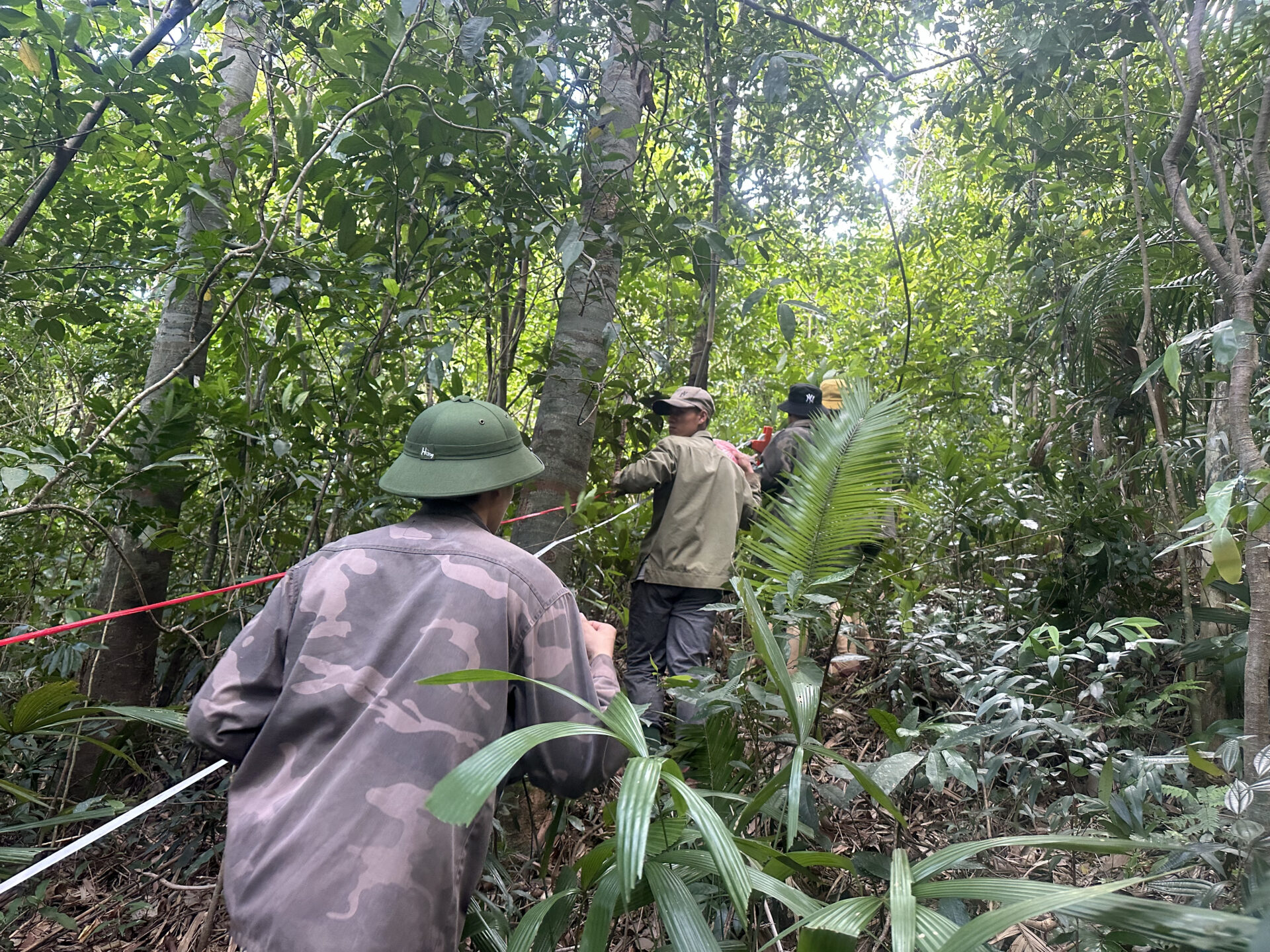
Colleagues in the School of Earth, Environment and Sustainability, and Viet Nature Conservation Centre, led by Dr Amy Bennett, have monitored 24 permanent forest plots in the Khe Nuoc Trong Nature Reserve in central Vietnam between 2016 and 2024. The forests, which were selectively logged until 2007 and are now protected, showed no detectable net increase in aboveground carbon stocks at all.
Although trees continued to grow and establish, carbon gains were almost entirely offset by carbon losses through tree mortality. As a result, the forests maintained their existing carbon stocks but did not function as a significant carbon sink.
Dr Amy Bennett, from the School of Earth and Environment, said:
Tropical forests are often viewed as powerful nature-based solutions to climate change because they can remove carbon dioxide from the atmosphere as they recover. What we found in central Vietnam is that recovery is not always guaranteed. Despite nearly two decades of protection, these forests are not accumulating carbon overall.
The researchers found that carbon recovery rates were significantly lower than widely used recovery rates for forest regrowth from the Intergovernmental Panel for Climate Change (IPCC) and rates in comparable recovering forests in Sabah, Malaysia.
One of the key findings from the study was the role of temperature. Since these forests have been measured, maximum temperatures have increased, and higher temperatures were associated with lower carbon gains from tree growth and recruitment.
Dr Bennett said:
We found that hotter conditions were linked to reduced forest productivity. Carbon gains declined over time while carbon losses remained relatively stable, suggesting that warming temperatures may already be constraining recovery in these forests.
The findings add to growing evidence that tropical forests may be increasingly vulnerable to climate change. The study identified maximum temperature as a stronger predictor of forest productivity than rainfall, topography or forest structure. Historic logging intensity also continued to influence recovery, with more heavily logged forests showing lower carbon gains.
Despite the lack of carbon recovery, the researchers highlight an important positive finding. The forests maintained their existing carbon stocks throughout the monitoring period, with no detectable net carbon loss. This suggests that protection measures within the nature reserve have been effective in safeguarding important carbon stores and biodiversity.
The study also raises important questions for forest restoration projects and carbon markets, which often rely on generalised assumptions about how quickly forests recover. The authors argue that long-term, site-specific monitoring is essential for accurately assessing the climate benefits of restoration and avoiding overestimates of future carbon sequestration.
This work involved collaborators from the University of Leeds, Maastricht University, Viet Nature Conservation Centre and Khe Nuoc Trong Nature Reserve.
The research builds on more than a decade of collaboration between the University of Leeds, VietNature Conservation Centre and local partners in Vietnam. Previous studies by the team quantified the impacts of logging on forest carbon stocks and examined the links between forest protection and local livelihoods, helping to inform conservation efforts in the region. This body of research contributed to the evidence base supporting the designation of Khe Nuoc Trong as a Nature Reserve in 2020, and continues to provide insights into how tropical forests respond to protection, disturbance and climate change.
Read the new study:
Bennett et al., No net carbon recovery in logged tropical forests in central Vietnam
Related research from Khe Nuoc Trong:
- Implications of tropical cyclones on damage and potential recovery and restoration of logged forests in Vietnam
- Logging in Vietnam: protecting carbon stocks and livelihoods
- Logging intensity drives variability in carbon stocks in lowland forests in Vietnam
- The potential for REDD+ to reduce forest degradation in Vietnam